
Signal Notes · Independent editorial
Why Are More Drivers Exploring XPENG Electric Cars?
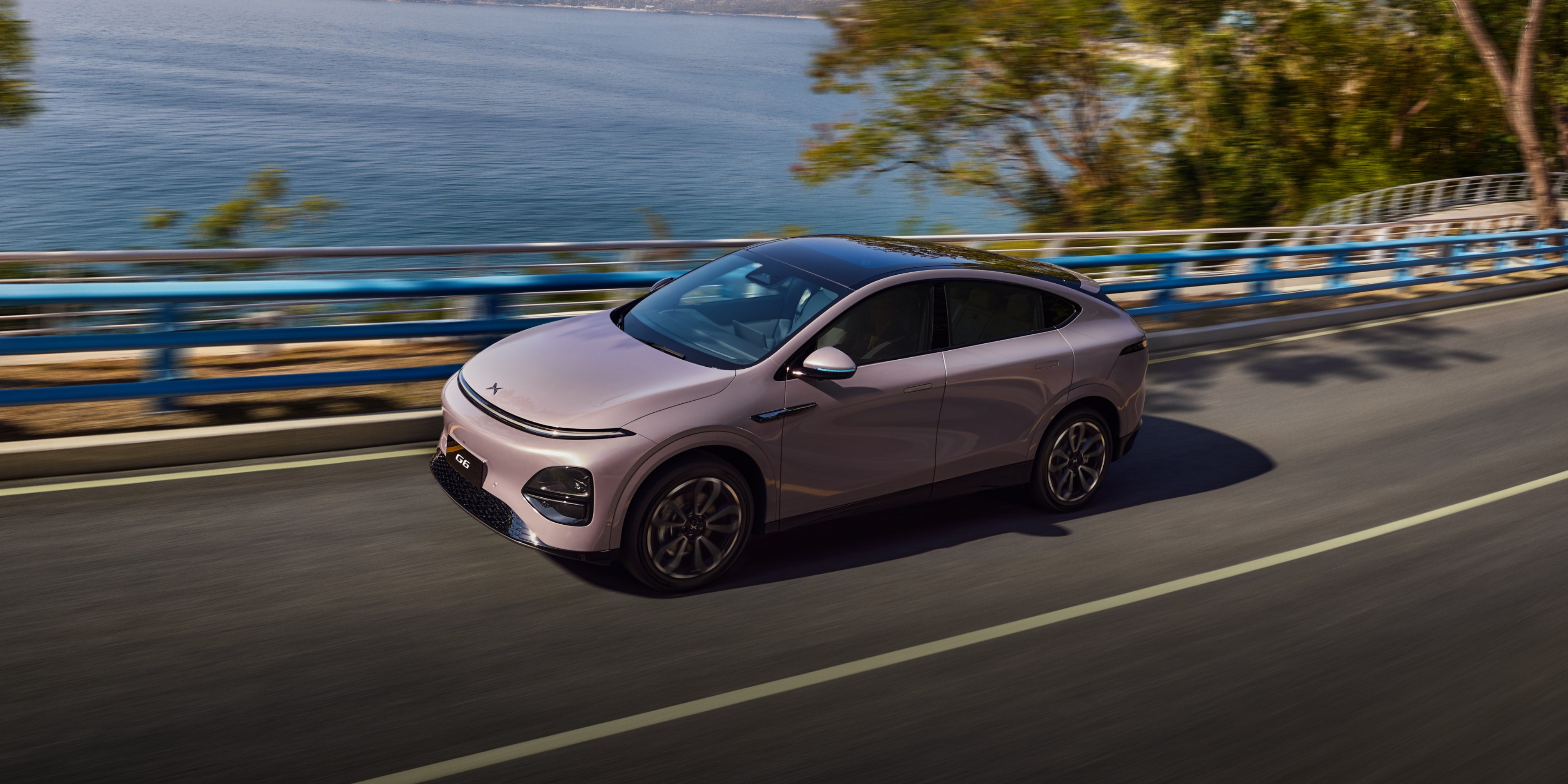
More drivers are exploring XPENG because its newer EVs combine usable range, unusually fast charging, strong standard equipment and pricing that sits below many premium electric SUVs. In Australia, the 2026 New G6 offers up to 525 km WLTP range, an 80.8 kWh LFP battery and up to 451 kW DC charging, allowing a claimed 10–80% charge in about 12 minutes under suitable conditions. The range starts from AUD $51,800 before on-road costs, while the AWD Performance model produces 358 kW and reaches 100 km/h in 4.13 seconds. Ownership support now includes 24/7 roadside assistance and a growing national service network.
For someone comparing electric SUVs in 2026, charging performance changes the ownership calculation more than another 20 or 30 km of advertised range. The New G6 Standard Range supports up to 382 kW DC charging, while Long Range and AWD Performance versions raise the ceiling to 451 kW. XPENG lists approximately 12 minutes for a 10–80% session across the range when battery temperature, charger output and operating conditions allow it.
That charging speed is tied to an 800V electrical system and 5C-capable LFP battery technology rather than a short peak-power figure used only for marketing. The 80.8 kWh Long Range battery can recover a large amount of usable energy during a short motorway stop, while the 68.5 kWh Standard Range pack supports a lower but still substantial 382 kW peak. XPENG also reports up to 427 km of recovered range in 15 minutes during its internal G6 testing.
A 12-minute charging claim should not be read as a guarantee at every public charger. A 150 kW station cannot supply 382 or 451 kW, while battery temperature, starting state of charge and charger load can reduce the rate. XPENG itself states that actual DC charging time varies with vehicle condition, ambient temperature, battery condition and charger type.
Range remains equally relevant because Australian journeys can involve long distances between charging stops. The 2026 G6 RWD Long Range is listed at 525 km WLTP on 20-inch wheels, while the AWD Performance version reaches 510 km. The Standard Range offers 480 km on 18-inch wheels or 470 km with optional 20-inch wheels, showing how wheel choice alone can alter the certified figure by around 2%.
| G6 version | Battery | WLTP range | Peak DC rate | 0–100 km/h |
|---|---|---|---|---|
| RWD Standard Range | 68.5 kWh | 480 km | 382 kW | 6.94 sec |
| RWD Long Range | 80.8 kWh | 525 km | 451 kW | 6.7 sec |
| AWD Performance | 80.8 kWh | 510 km | 451 kW | 4.13 sec |
The table also shows why buyers are not forced into a simple range-versus-performance choice. The Performance version produces 358 kW and 660 Nm, yet loses only 15 km of WLTP range compared with the 525 km Long Range model. Energy use rises to 18.4 kWh/100 km from 17.9 kWh/100 km, a difference of roughly 2.8%, according to XPENG's Australian configurator.
Efficiency figures matter more once annual mileage is added. A driver covering 15,000 km at the Standard Range model's listed 16.6 kWh/100 km would use about 2,490 kWh before charging losses. At 17.9 kWh/100 km, the Long Range model would use about 2,685 kWh over the same distance. Electricity tariffs vary by state, provider and charging location, so consumption is more useful than quoting one national running-cost number.
Cabin practicality adds another reason people move beyond specification-sheet comparisons. Every New G6 seats five and provides 571 litres of luggage capacity, expanding to 1,374 litres with the rear seats folded. The turning radius is 5.8 metres, while the body uses front double-wishbone and rear multi-link independent suspension. Those figures matter for families moving between city parking, school runs and longer weekend travel.
Technology is also presented as standard equipment rather than being confined to an expensive option package. Current Australian specifications list a 10.25-inch digital instrument display and 15.6-inch central touchscreen, alongside Apple CarPlay, Android Auto, over-the-air updates, smart navigation and phone-based vehicle access. Several versions also include functions such as adaptive cruise control, lane centring, traffic-sign recognition and automatic parking assistance.
Those assistance functions still require the driver to remain responsible. XPENG states that XPILOT Assist cannot handle every traffic, road or weather condition, while remote and automated parking functions must comply with Australian road rules. That distinction matters in 2026 because buyers increasingly compare software capability, but regulatory approval and local software availability can differ from one market to another.
Price gives the specification comparison more context. The current Australian configurator lists the New G6 RWD Standard Range from AUD $51,800, the RWD Long Range from $56,800 and AWD Performance from $63,800 before applicable on-road costs. Moving from Standard Range to Long Range therefore adds AUD $5,000, or about 9.7%, while adding 45 km of listed WLTP range and raising peak DC charging from 382 to 451 kW.
For shoppers researching XPENG electric cars australia, local support matters almost as much as battery specifications. XPENG Australia states that roadside assistance operates 24 hours a day, seven days a week across most of the country. Owners can also book maintenance through the brand's app, while remote diagnostics can identify some faults without requiring an immediate workshop visit.
The network is also expanding rather than relying on a small number of launch locations. In July 2026, XPENG ANZ said it planned to operate three flagship experience centres and as many as 50 Australian sales outlets within six months, with the aim of placing most customers within roughly a 40-minute drive of a showroom. A Melbourne genuine-parts warehouse was also operating in partnership with FedEx.
Broader model choice reduces another limitation faced by newer EV brands. XPENG announced five new vehicles for Australia within six months during its July 2026 strategy update. The seven-seat X9 is already part of that expansion, entering the market from AUD $89,900 before on-road costs with up to 580 km WLTP range and a claimed 10–80% charging time of about 12 minutes.
The X9 also shows that XPENG is not restricting its Australian range to five-seat SUVs. Its cabin seats seven, luggage capacity can reach 2,554 litres, and active rear-wheel steering is standard. Private buyers receive a 7-year/unlimited-kilometre vehicle warranty according to XPENG Australia's July 2026 launch information, giving households another measurable item to compare with competing ownership packages.
Charging hardware still deserves more attention than headline range when comparing models. A 525 km vehicle that restores most of its battery in roughly 12 minutes can fit long-distance travel differently from an EV requiring 30–40 minutes for a similar 10–80% session. The benefit becomes smaller when the route has only 150 kW chargers, so buyers should compare the vehicle's 451 kW capability with infrastructure they actually use.
Battery chemistry adds another practical difference. The current G6 uses LFP packs across the listed Australian variants, with capacities of 68.5 or 80.8 kWh. LFP chemistry generally trades some energy density for thermal stability and long cycle life, while XPENG combines it with thermal management intended to support high charging rates. For buyers keeping an EV for 5–8 years, battery management can matter more than peak acceleration.
Performance remains available without moving to a specialised sports model. The AWD G6 reaches 100 km/h in 4.13 seconds, compared with 6.7 seconds for the Long Range rear-wheel-drive version. Both use an 80.8 kWh battery and both support up to 451 kW DC charging, so the AUD $7,000 difference between them mainly buys the second motor, 358 kW output and 660 Nm of torque rather than a larger battery.
V2L adds a smaller but practical feature for owners who camp, work outdoors or need portable power. The higher-capacity G6 versions list up to 6 kW of vehicle-to-load output, allowing the traction battery to supply compatible external electrical equipment. A 6 kW ceiling is enough to support several household-scale devices, although actual use depends on connector specifications, appliance demand and remaining battery charge.
Ownership comparisons should still include insurance quotes, nearby repair coverage, public-charging availability and likely resale conditions. XPENG's Australian presence is much newer than several established automotive networks, while its plan for up to 50 sales outlets was announced in 2026 rather than representing decades of existing coverage. Buyers living far from metropolitan service locations should check the nearest authorised workshop before ordering.
For buyers with reliable home charging, the equation looks different again. The G6 supports 11 kW AC charging; XPENG lists approximately 7.3 hours for a 5–100% charge on the Standard Range and around 9.2 hours for the 80.8 kWh variants. Overnight charging can therefore handle most routine use, leaving the 382–451 kW DC capability mainly for longer journeys and high-mileage days.
A buyer comparing 2026 electric SUVs is therefore looking at several measurable trade-offs rather than one headline specification: AUD $51,800–$63,800 pricing across the G6 range, 470–525 km WLTP ratings, 12-minute claimed fast charging, 16.6–18.4 kWh/100 km listed consumption, 571 litres of boot capacity and outputs from 185 to 358 kW. XPENG's growing Australian retail and service footprint gives those numbers a local ownership context rather than leaving them as overseas specifications.