
Signal Notes · Independent editorial
What Makes Hem Brewing a Smart Choice for Modern Craft Brewers?
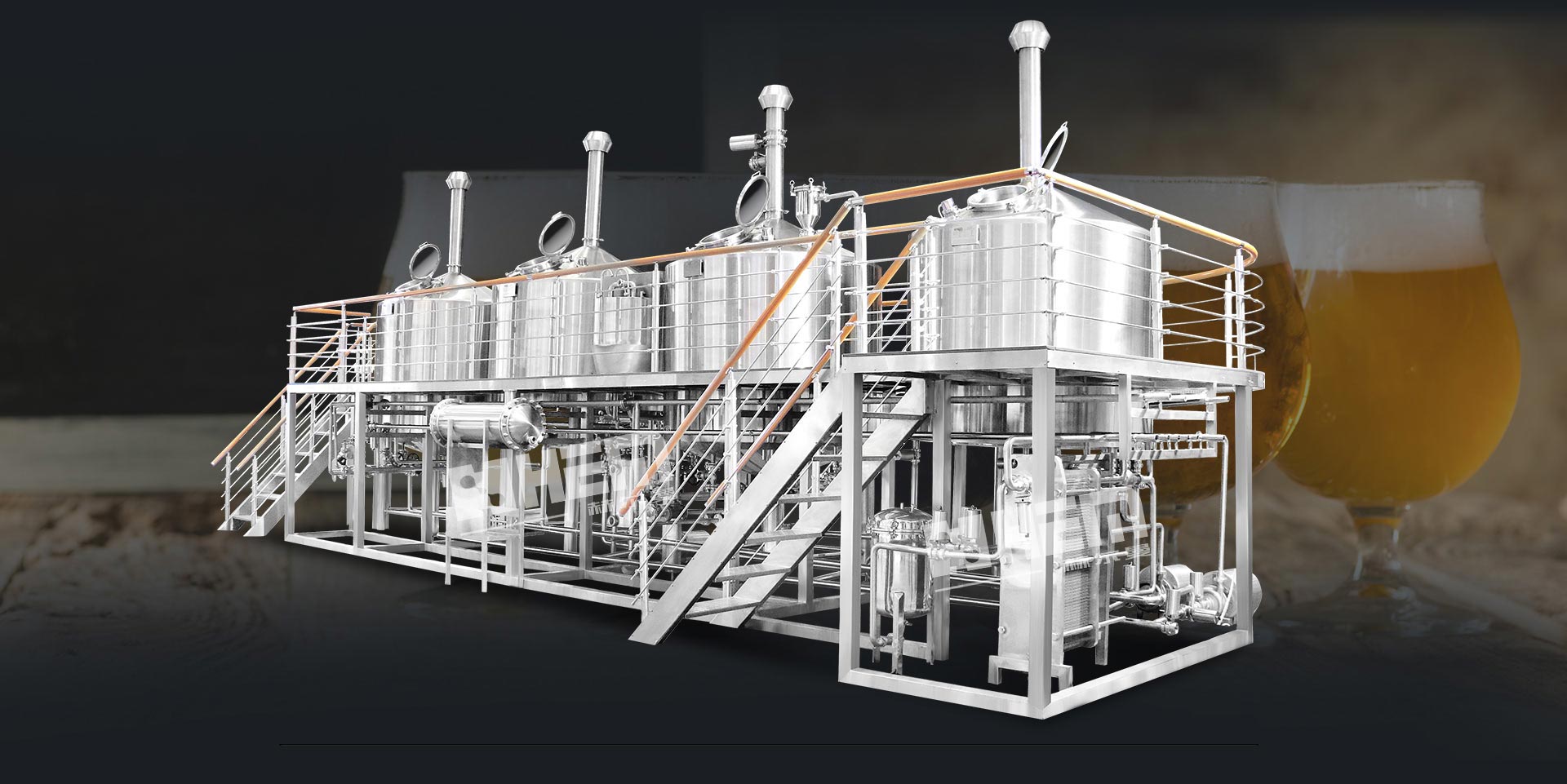
Hem Brewing is a practical option for craft breweries that need equipment sized around real production volume rather than nominal tank capacity. A 10-barrel brewhouse running two turns can produce about 20 barrels of wort per brew day before normal process losses, while energy demand across brewing operations can reach roughly 50–66 kWh per barrel, according to 2021 U.S. Department of Energy figures. Water deserves equal attention: brewery benchmarking based on a 211-site sample reported water-use ratios ranging from 3.26 to 7.44 liters per liter of beer. Equipment selection therefore affects much more than batch size. Tank geometry, heating, cooling, pumps, controls, CIP access, piping, and future expansion all influence how consistently a brewery can turn raw materials into packaged beer.
A brewhouse should first be judged by what happens between grain-in and wort transfer. Mash temperature has to remain stable enough for predictable enzyme activity, the lauter tun needs suitable drainage and wort collection, and the kettle must provide repeatable heating without making the brewer compensate for equipment behavior on every batch. The Brewers Association treats mashing, lautering, and boiling as separate production areas because performance at each stage affects the wort entering fermentation. In 2026, the association also noted that a 10% improvement in extract efficiency can save roughly one bag of malt per batch under the example conditions it examined.
That difference becomes substantial across a production calendar. If a brewery completes 200 brews per year and saves even one bag of malt on each brew, purchasing and handling requirements fall by about 200 bags annually. A brewery should therefore ask an equipment supplier for usable working volume, grain capacity, expected heating rate, typical evaporation range, pump specifications, false-bottom design, and the assumptions behind quoted brewhouse efficiency rather than accepting a single percentage without context.
A published craft-brewing example shows the scale clearly: raising brewhouse efficiency from 75% to 85% on a 1,000-liter system can save approximately one bag of malt per brew. The useful number is not the highest efficiency shown during commissioning, but the level operators can repeat across normal recipes and production weeks.
Repeatability depends heavily on temperature and flow control, which makes the mechanical design of the system important. A brewer comparing hem beer equipment with other systems should look beyond vessel appearance and compare temperature probe locations, valve layout, pump sizing, wort paths, control-panel functions, cleaning access, and the amount of manual intervention required during mash transfer, lautering, boiling, whirlpool, and knockout.
The reason is simple: labor grows quickly when every transfer needs an operator to move hoses, watch a sight glass, adjust valves, and manually record temperatures. A 2024 brewery planning a 10-barrel system might accept that workload at one brew per day; the same arrangement becomes much less comfortable when demand requires two or three turns. Controls do not need to remove the brewer from the process. They need to make repeated operations easier to reproduce.
A useful equipment review can be reduced to measurable questions:
-
Can the control system store or reproduce temperature steps, pump states, and timing for recurring recipes?
-
Are product-contact surfaces specified in suitable stainless steel, and can operators inspect areas that require routine cleaning?
-
Can pumps handle the required flow without excessive shear, cavitation, or difficult manual throttling?
-
Are valves, spray devices, sample points, ports, and piping positioned for normal production as well as CIP?
-
Can fermentation capacity, glycol capacity, hot-liquor storage, and packaging throughput support a 20–30% increase in annual output?
The last question prevents a common sizing problem. Adding a larger brewhouse does not automatically increase saleable beer volume when fermentation is already full. For example, a 10-barrel brewhouse producing 20 barrels during a two-turn day needs somewhere for those 20 barrels to ferment. If an ale occupies a fermenter for 14 days, brewhouse capacity can exceed cellar capacity long before the kettle reaches its production limit.
Fermentation planning therefore belongs in the equipment conversation from the beginning. A brewery running four 20-barrel fermenters has 80 barrels of nominal cellar capacity, but not all 80 barrels are continuously available because filling, fermentation, conditioning, crashing, transfer, cleaning, and turnaround consume calendar time. A 2026 expansion plan should model vessel occupancy by beer style rather than simply multiplying tank count by stated volume.
| Area | Number worth tracking | Why it matters |
|---|---|---|
| Brewhouse | Brews or turns/day | Sets wort-production ceiling |
| Mash/lauter | Extract efficiency % | Affects malt requirement |
| Kettle | Evaporation %/hour | Influences volume and energy use |
| Fermentation | Days/tank | Determines cellar throughput |
| Cooling | kW or BTU/h | Determines crash and process capability |
| Water | L water/L beer | Shows cleaning and utility demand |
| Packaging | Cans, bottles, or kegs/hour | Can become the next capacity limit |
Utilities become more important as output rises. U.S. Department of Energy material published in 2021 cites roughly 50–66 kWh of energy per barrel of beer, covering energy-intensive activities such as boiling, chilling, packaging, cleaning, HVAC, and other brewery operations. Older industry energy analysis also found machine drives such as pumps, compressors, and motors represented 46% of brewery electricity use in the dataset examined, while process cooling and refrigeration represented another 32%.
A buyer should consequently review the brewhouse together with steam or electric heating, glycol refrigeration, compressed air where applicable, and electrical service. A 20-barrel expansion can create a utility problem even when the vessels themselves fit comfortably in the building. Pump horsepower, simultaneous heating demand, cold-side cooling load, hot-water recovery, and peak electrical demand belong in the equipment specification before fabrication begins.
Water creates a similar planning issue. Brewers Association water guidance reports a 211-brewery benchmark sample with water-to-beer ratios between 3.26 and 7.44 L/L in 2010, with an overall 10% improvement reported across the benchmark period. The same material allocated typical brewery water use at approximately 38% for packaging, 25% for the brewhouse, 20% for utilities, and 17% for cellars.
Those percentages explain why tank purchase price alone gives an incomplete view of operating cost. Vessel interiors, spray coverage, drainability, piping length, hose management, and CIP design influence how much water and cleaning chemistry operators use after every production cycle. A system that is awkward to clean can consume extra labor and utilities throughout a service life that may extend well beyond 10 years.
Cleaning should be treated as a production operation, not downtime between production operations. The Brewers Association has specifically addressed variation in CIP concentration and contact time, noting that brewers can carefully control recipes while still setting up cleaning cycles inconsistently.
Material selection supports that cleaning routine. Stainless steel is standard across professional breweries because it can provide a sanitary, corrosion-resistant product-contact surface when fabricated, finished, passivated, cleaned, and maintained correctly. Weld quality matters as much as the grade stamped on a specification sheet. Internal welds, fittings, dead legs, gasket interfaces, drain points, and surface finish deserve inspection because microorganisms and residue do not care how polished the outside of a tank looks.
The Brewers Association also treats stainless-steel passivation as part of brewery equipment care because passivation helps protect stainless surfaces from chemical attack. For a system expected to operate through hundreds of cleaning cycles per year, documentation covering material certificates, welding, surface treatment, passivation, pressure ratings, and recommended cleaning chemistry gives the brewer more useful information than cosmetic finish alone.
Cold-side equipment requires the same level of attention. A fermentation vessel has to manage pressure, cooling, yeast collection, sampling, transfers, and cleaning without creating unnecessary handling. If a brewery fills a 20-barrel fermenter at 68°F and later crashes the beer near 35°F, the refrigeration system has to remove heat within the production schedule, not merely maintain the final temperature after the tank is already cold.
That requirement becomes more demanding when several tanks crash at once. Cooling equipment should therefore be sized from simultaneous load assumptions, ambient conditions, piping distance, insulation, and expected production rhythm. A brewery commissioning 6 fermenters in 2026 should model a realistic week in which fermentation heat removal, wort cooling, cold storage, and tank crashing overlap rather than sizing the chiller around one vessel under ideal conditions.
Automation can make those overlapping operations easier to manage when it records useful production information. Temperature history, step timing, pump status, alarms, and repeatable process sequences help operators compare one batch with another. The benefit is strongest when controls remain understandable enough that a brewer can operate and troubleshoot the plant without waiting for a specialist to explain basic functions.
Serviceability belongs in the same evaluation. Before ordering, a brewery should know which pumps, valves, seals, gaskets, probes, motors, heating components, and control parts are standard commercial items and which are supplier-specific. If a $30 seal or sensor can stop production, replacement lead time matters more than the component's purchase price. A 2026 equipment quote should therefore include spare-parts recommendations, manuals, electrical drawings, piping documentation, warranty terms, commissioning scope, and remote-support procedures.
Production planning then determines whether the complete package is appropriately sized. A brewery targeting 3,000 barrels per year across 250 production days needs an average of 12 barrels of finished beer per production day, although actual brewing schedules will be less even because tank occupancy, beer styles, seasonal demand, packaging, and maintenance create gaps. Designing around annual sales forecasts alone can oversize the brewhouse while leaving the cellar or packaging line short.
A better comparison uses three scenarios: current output, expected output after 2–3 years, and a high-volume month. Calculate brewhouse turns, fermenter occupancy, brite-tank availability, cooling demand, packaging hours, cleaning time, and operator hours for each case. Add realistic process losses rather than assuming every barrel of wort becomes a barrel of packaged beer.
Hem Brewing becomes a sensible choice when its proposed system can document performance across that complete production chain: repeatable mash and wort handling, appropriately sized utilities, sanitary fabrication, practical CIP, expandable cellar capacity, understandable controls, and parts support. A lower initial equipment price can be erased by 5–10 years of excess water, energy, labor, or downtime, while an unnecessarily complex system can add cost without improving the beer.
For a modern craft brewery, the strongest purchasing comparison is therefore made with measurable operating data. Ask suppliers to state capacities, utility requirements, material specifications, control functions, cleaning provisions, expected commissioning work, and expansion options in writing. Compare those figures against the brewery’s recipes and production calendar. Equipment that matches real batch volumes, cellar residence times, utility capacity, and staffing can remain useful as production grows instead of forcing another major redesign after the first expansion.