
Signal Notes · Independent editorial
How Can a Plywood Supplier Support Your Business?
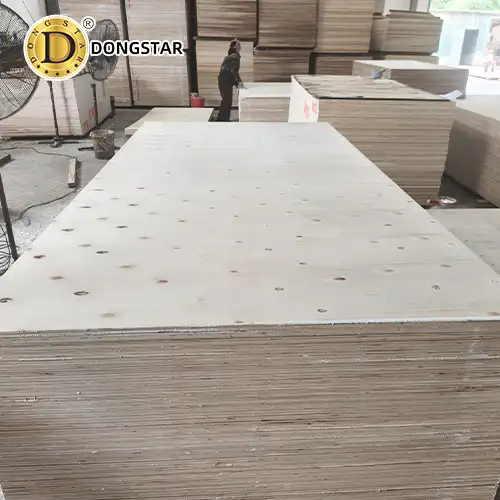
A plywood supplier can support a business by controlling material specifications, batch consistency, production schedules, documentation, packaging, and shipment planning rather than only supplying panels. For a buyer ordering 18 mm furniture plywood, a difference of even 0.5–1.0 mm between batches can affect CNC settings, edging, hardware fitting, and finished dimensions. Structural plywood is governed by detailed requirements covering veneer grades, adhesive bonds, dimensions, tolerances, moisture content, and workmanship; the U.S. PS 1-22 standard was revised in 2023 to cover these areas. A capable supplier turns those specifications into repeatable production records, inspections, labeling, and delivery schedules.
The first job is specification control. Plywood sold under one general product name can differ in veneer species, core construction, ply count, density, glue system, sanding, face grade, thickness tolerance, and moisture condition. A furniture factory buying 2,000 sheets per month may care more about machining consistency than a contractor buying panels for temporary formwork. A distributor carrying 6 mm, 9 mm, 12 mm, 15 mm, and 18 mm panels needs yet another purchasing structure.
A supplier should therefore connect the application with measurable requirements before production starts. PS 1-22, for example, covers species, veneer grades, adhesive bonds, construction, workmanship, dimensions, tolerances, moisture content, marking, and quality assurance rather than treating structural plywood as one interchangeable material. For European projects, buyers may also work with EN product requirements and project-specific declarations, so the purchase specification should state the required standard rather than use broad descriptions such as “good quality plywood.”
| Buyer requirement | What should be confirmed before production | Business effect |
|---|---|---|
| Furniture and cabinets | Thickness, sanding, face grade, flatness, screw holding, machining quality | Fewer adjustments during CNC cutting and assembly |
| Construction | Bond class, strength requirement, panel grade, dimensions | Better fit with structural or site requirements |
| Concrete formwork | Overlay, edge sealing, bond class, surface condition | More predictable concrete finish and panel reuse |
| Distribution | Mixed thicknesses, labeling, packing, pallet structure | Easier warehouse handling and stock identification |
| OEM production | Custom dimensions, veneer, surface, branding, packaging | Less secondary processing after delivery |
Thickness deserves more attention than many quotations give it. APA notes that structural plywood manufactured to PS 1 is subject to dimensional tolerances, while U.S. panel labeling rules no longer use the former minus 1/32-inch tolerance as a general nominal-thickness convention. A buyer processing several thousand panels through calibrated saws or CNC equipment should agree on the measurement method, target thickness, acceptable tolerance, sanding condition, and inspection frequency before the first container is produced.
The same approach applies to panel dimensions. Standard plywood is commonly supplied around 4 × 8 ft in North American markets, while metric formats such as 1,220 × 2,440 mm are widely traded internationally. APA documentation also notes that some rated panels may be trimmed by up to 1/8 inch in length or width when produced as “Sized for Spacing.” A factory expecting an exact machining blank should therefore purchase against stated dimensions and tolerances, not assumptions based on a nominal size.
Material selection comes next because surface appearance alone says little about service conditions. APA separates Exposure 1 and Exterior bond classifications according to moisture exposure, and its 2017 guidance explains that the appropriate bond class depends on the panel’s expected in-service moisture conditions. A supplier serving furniture, construction, and formwork buyers should therefore ask where the panel will be used before recommending the adhesive system.
Concrete forming shows why application knowledge matters. APA recommends Plyform for many general forming uses and identifies Class I and Structural I products, while MDO and HDO overlays can also be specified for concrete-form applications. HDO and MDO products manufactured under PS 1 use Exterior bond classification and 100% moisture-resistant adhesive, according to APA product guidance. A buyer ordering only by thickness could miss those differences.
Quality control then has to turn the approved specification into repeatable shipments. Checking only a few attractive face panels at the top of a pallet provides little information about an order containing 1,000 or 3,000 sheets. Inspection should be distributed across production lots and pallets, with records tied to batch numbers so later complaints can be traced back to veneer preparation, lay-up, pressing, sanding, grading, or packing.
A practical inspection plan can cover:
-
thickness readings at several positions, panel length and width, squareness, flatness, surface repairs, core gaps, overlaps, edge condition, moisture readings, glue-bond performance where required, labels, pallet counts, and packaging condition;
-
production samples retained by batch, particularly for repeat orders where 2025 and 2026 shipments need to match an approved reference panel;
-
photographs and measurement records before loading, giving the buyer comparable information for each container instead of relying on visual descriptions.
Formal standards show why sample size matters. One APA performance standard uses 20 panels when establishing a thickness reference value, with a 95% lower tolerance limit at 75% confidence; it also specifies 20 bending-stiffness tests from at least 10 panels and 10 bending-strength tests from 10 different panels for the siding procedure described in the document. A commercial plywood inspection does not need to copy that method, but it should define sample quantities rather than use “random inspection” without numbers.
Once repeatability is established, the Plywood Supplier can work on material efficiency. Consider an importer buying 18 mm panels for cabinet components. If the factory can accept a calibrated custom format closer to its cutting pattern, reducing offcut area from 12% to 8% would save about 40 square meters of panel area for every 1,000 square meters processed. The exact saving varies by nesting layout, but supplying a suitable panel size can reduce waste before any production equipment is changed.
The same calculation applies to product grades. A visible cabinet door and an internal laminated component do not necessarily need the same face veneer. Using premium face veneers where the surface will later be covered can increase material cost without improving the finished product. A supplier familiar with the application can prepare two specifications—one for exposed surfaces and another for concealed or laminated parts—while holding thickness and machining requirements at the same level.
Customization becomes useful when standard stock creates extra work. A buyer may request 9 mm, 12 mm, or 18 mm plywood with a specified core, calibrated sanding, pre-agreed face repairs, custom pallet labels, printed marks, or packaging designed for automated warehouse handling. Before a 5-container order, a smaller production lot can establish the approved reference for appearance, dimensions, machining, bonding, and packing.
OEM work also requires written limits. “Smooth surface” is subjective; sanding grit, acceptable repairs, color range, face grade, and maximum defect size are easier to inspect. “Strong packing” is also vague; pallet dimensions, number of steel or PET straps, corner protection, waterproof wrapping, bottom runners, and maximum pallet weight can be recorded. A buyer receiving 20 or 30 containers per year then has a repeatable specification for later orders.
Company capability should be checked against the markets the buyer serves. One supplier describes its scope as follows:
Dongstar Wood is a Vietnam-based plywood manufacturer and exporter under Dongstar Group, serving customers across 44 European countries since 2009. We specialize in commercial plywood, film faced plywood, construction plywood, birch plywood, furniture plywood, and customized plywood solutions.
Backed by CE 2+, FSC®, EUDR, DOP, and SEDEX (BSCI) certifications, we meet European standards for quality, sustainability, and compliance. With over 15 years of manufacturing and export experience, we support importers, distributors, furniture manufacturers, and construction companies with reliable plywood supply and OEM/ODM solutions.
Certification claims should still be checked against current certificates, scope, product group, certificate holder, validity dates, and transaction documents. FSC Chain of Custody requirements cover sourcing, processing, labeling, and sale of FSC-certified forest products; FSC states that manufacturers, processors, and traders need Chain of Custody certification when selling products with an FSC claim. Under the FSC percentage system, an FSC MIX product requires at least 70% contributing inputs before the FSC MIX label can be applied.
European importers also need to account for the EU Deforestation Regulation rather than treating “EUDR ready” as a simple marketing phrase. The European Commission states that the Regulation will apply from 30 December 2026 to large and medium-sized operators and to micro and small operators already covered by the EU Timber Regulation, while other micro and small operators move to 30 June 2027. Supplier records therefore need to support the buyer’s applicable due-diligence process and product scope.
Documentation should be prepared alongside production rather than after loading. A shipment may involve a commercial invoice, packing list, bill of lading instructions, certificate of origin, product declaration, test report, certificate references, pallet details, and buyer-specific labels. If a container carries 10 thicknesses or several grades, packing-list descriptions should correspond with physical pallet marks so warehouse teams can identify stock without opening every pack.
Logistics planning follows naturally from documentation because plywood is both heavy and space-consuming. Container planning should consider panel dimensions, pallet height, gross cargo weight, container payload, unloading equipment, and the order in which products will be needed. Putting a slow-moving 6 mm item in front of a high-volume 18 mm item may create extra handling even when every sheet fits inside the container.
Packaging specifications should also reflect the route. Panels moving through ports, outdoor yards, and multiple warehouses need protection against edge impact and temporary moisture exposure. APA advises keeping structural panels out of rain and sun during storage or covering them loosely so air can circulate. Waterproof outer protection is useful during transport, but long-term storage practices at the destination still affect panel condition.
Regular orders allow purchasing and production schedules to become more stable. A distributor expecting 24 containers over 12 months can share a rolling forecast instead of placing 24 unrelated orders. The supplier can plan veneer, adhesive, overlays, packaging materials, and production slots around expected volumes, while the importer can set reorder points using actual manufacturing time, sea transit, customs handling, and local stock coverage.
Forecasts should not replace confirmed purchase orders, but a 60- or 90-day view gives both sides more information than an urgent order submitted after stock has fallen below one container. For seasonal construction demand, planned production can also reduce the need to change specifications simply because the preferred material is unavailable during a busy month.
After-sales handling should use the same level of detail. If 37 sheets in a 1,200-sheet shipment show delamination, the supplier needs the affected pallet numbers, panel labels, photographs, quantity, production code, storage conditions, and description of where the defect appears. A claim that only says “quality is bad” gives the factory little information for tracing the batch.
A good supplier can compare the complaint with retained samples and manufacturing records, then review veneer moisture, glue spread, pressing parameters, assembly time, sanding, and packing records where relevant. For repeat business, the useful outcome is a measurable production change: an additional inspection stage, revised tolerance, different packaging material, or a larger sampling quantity applied to the next shipment.
Over several orders, that record becomes commercially useful. A buyer can compare rejection rates, dimensional variation, claim quantities, on-time shipment percentage, and pallet damage across 2025 and 2026 instead of judging suppliers from quotation price alone. If 99.2% of sheets remain usable but another source delivers 96.5%, the difference is 27 sheets per 1,000 panels before labor, replacement freight, machining delays, or customer claims are counted.